 विश्वभारत News Website
Related Articles



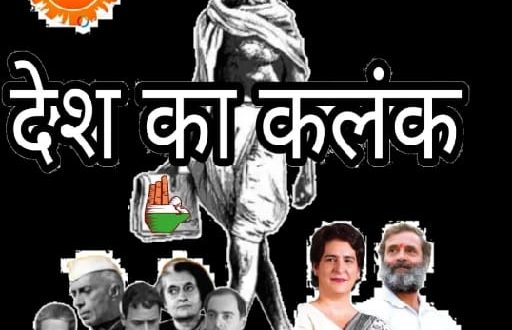
Is the Gandhi-Nehru Family Truly a Stain on the Nation?
Tekchand Shastri:
9822550220
New Delhi: Has the Gandhi-Nehru family truly been a blot upon the nation? This subject warrants deep study, contemplation, and reflection. According to available information, during his lifetime, Mahatma Gandhi sowed seeds of discord between Hindus and Muslims. He attempted to have the *Quran Sharif*—the holy book of Islam—recited within Hindu temples; however, he made absolutely no effort to have the *Shrimad Bhagavad Gita* recited within mosques. This disparity has engendered feelings of hatred and animosity toward Mahatma Gandhi within the orthodox Sanatani Hindu community. Had Mahatma Gandhi so desired, he could have fostered profound unity and brotherhood between Hindus and Muslims by initiating the recitation of the *Gita* in mosques and the *Quran* in temples. Yet, he chose never to do so. Was his primary objective, then, to cultivate feelings of hatred and mutual animosity between Hindus and Muslims? Similarly, Pandit Jawaharlal Nehru, too, consistently conducted himself and formulated his policies solely in favor of the Muslim community. By prefixing the title “Pandit” to his name, Jawaharlal Nehru achieved nothing other than hoodwinking the entire Sanatani Hindu community. Nehru was fully aware that Jammu and Kashmir constituted an integral part of India; nevertheless, by implementing Article 370 in the region, Jawaharlal Nehru effectively instigated conflict and unrest between Hindus and Muslims.
The Gandhi-Nehru family remains a highly polarizing subject within Indian politics, one that continues to spark heated debates. Critics frequently accuse the family of corruption (citing instances such as the *National Herald* case), dynasticism, and compromising national interests; conversely, their supporters highlight the family’s sacrifices for the nation and their pivotal role in the construction of modern India.
Various perspectives exist regarding the Gandhi-Nehru family, and several aspects of their legacy have served as focal points for criticism. Leaders and supporters of the Bharatiya Janata Party (BJP) contend that, ever since independence, the family—through its policies and “nefarious deeds”—has steered the nation into a quagmire of problems. They have been accused of insulting Hindu sentiments through their dietary habits during Nehru’s foreign tours (specifically, allegations of consuming beef), and of running a “parallel government” during Sonia Gandhi’s tenure.
Supporters of this family assert that the Nehru-Gandhi clan has dedicated its private assets to the nation since as early as 1930, and that all allegations of corruption leveled against them are baseless. For quite some time now, a nationwide political debate has been raging on this very subject.
This debate continues within the political sphere—and is likely to persist—centering on the question of whether the Gandhi-Nehru family provided direction to the nation or, conversely, caused it harm for the sake of their own political agenda. Reflecting upon this subject is an inherently precarious undertaking.
It is a politically motivated perception: one that opposition parties view as a “stain upon the nation,” while supporters regard it as a “pillar of the nation.”